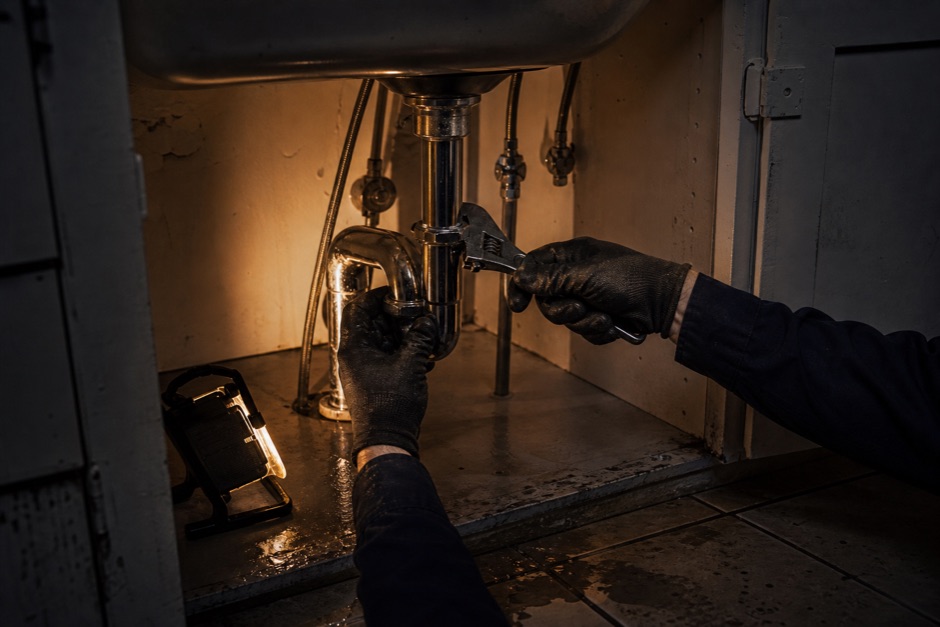
Year-round demand, and the branch most crowded with directories and job resellers. A customer arriving with a leak doesn't compare: they want to know who's coming and when.
Why they call
Visible leak under the sink or basin.
Damp patch on the neighbour's ceiling.
A drain that runs slow or blocks.
A cistern that never stops running.
Water hammer when a tap closes.
What to do until the installer arrives
Close the main stopcock first: it stops the damage and lowers the bill.
If water reaches the board or sockets, cut the power too.
Mop up what you can and warn the flat below if it's seeping through.
Don't pour chemicals into a blockage that's already overflowing.
With fire, a strong gas smell, accessible live cable or flooding near electrics, call 112 before any installer.
What the job includes
Locating the leak before opening anything up.
Repair or replacement, with the choice explained first.
Written quote before breaking tiling.
A pressure check once the work is done.
How the quote is worked out
Call-out to your area.
Labour in blocks.
Plumbing material, itemised separately.
Night or public-holiday surcharge, where it applies.
Frequently asked
Do you always have to break tiles to find a leak?
No. First it's located; opening up without locating is what makes the repair expensive.
Does home insurance cover it?
Often yes, with conditions. Worth asking before commissioning the repair, not after.
Does this branch need registration?
Plumbing that doesn't touch regulated installations isn't under the same registry control. If the work touches gas or heating, then it is.